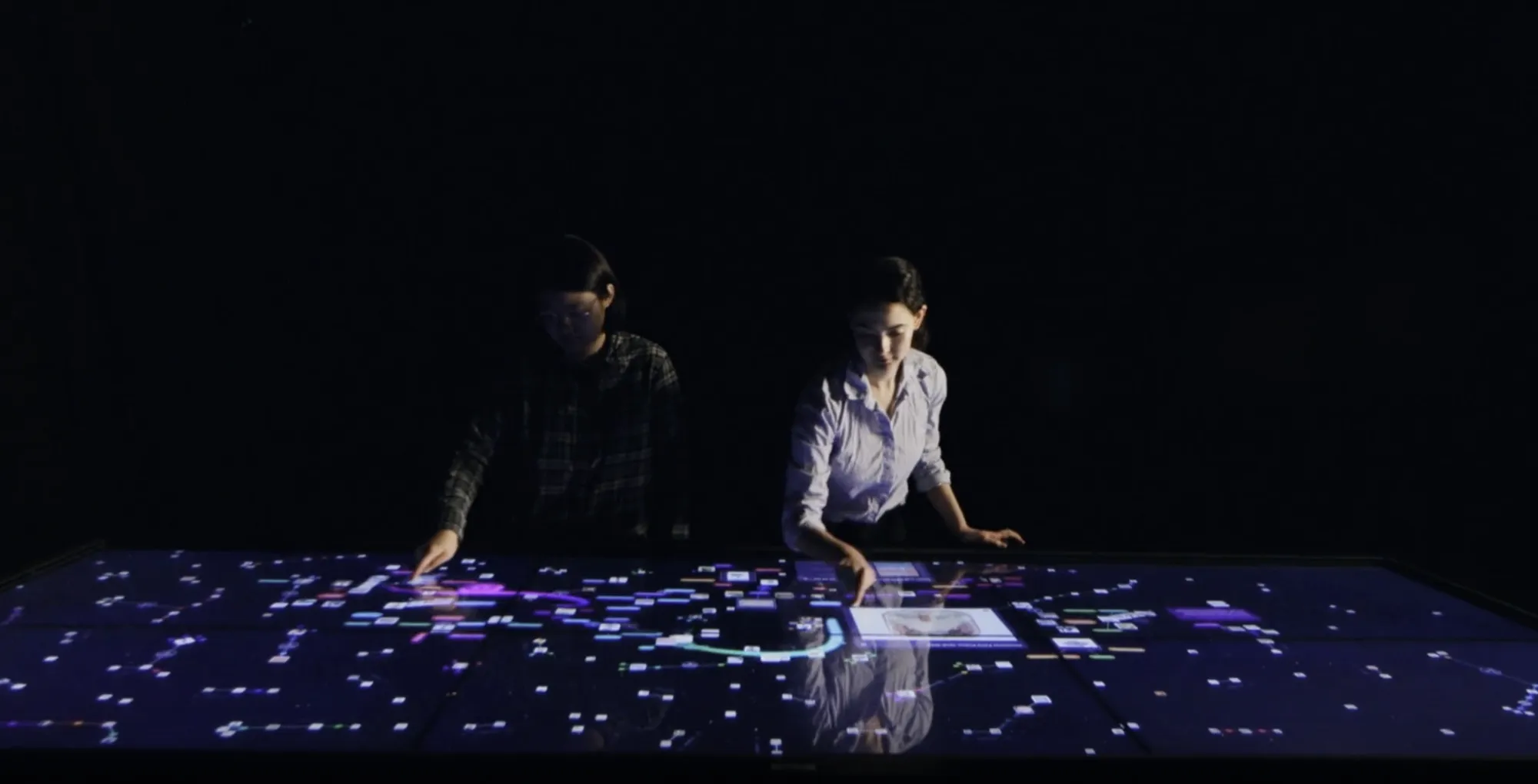
AI: Mind the Gap
Two installations for the MIT Museum’s AI gallery. One invites visitors to write poetry with GPT-3, months before ChatGPT; the other lets them watch a neural network read their drawing, layer by layer.
- Role
- Led prototyping and development of both installations
- Studio
- Bluecadet
- Built with
- GPT-2, GPT-3, TensorFlow, Unity, TouchDesigner, Three.js, React
- Recognition
- Webby Award, 2023
At Bluecadet, I worked on media design and production for the whole MIT Museum, from the first brainstorm to its reopening in Kendall Square in 2022. In its AI gallery, AI: Mind the Gap, I shaped the concepts for two signature installations and led their prototyping and development.
Where I contributed
Concept2020
Co-proposed the Collaborative Poetry idea in the first brainstorm and shaped both concepts with the design team.
Prototyping2020–2021
Built GPT-2 and GPT-3 prototypes, a crowdsourcing app, and a projection test to explore and refine each idea.
Design2021
Translated model capabilities into UX decisions and built React prototypes for user testing.
Production2021–2022
Led development in Unity: the writing flow, content moderation, simulated paper, and a real-time neural network.
Installation 1
Collaborative Poetry
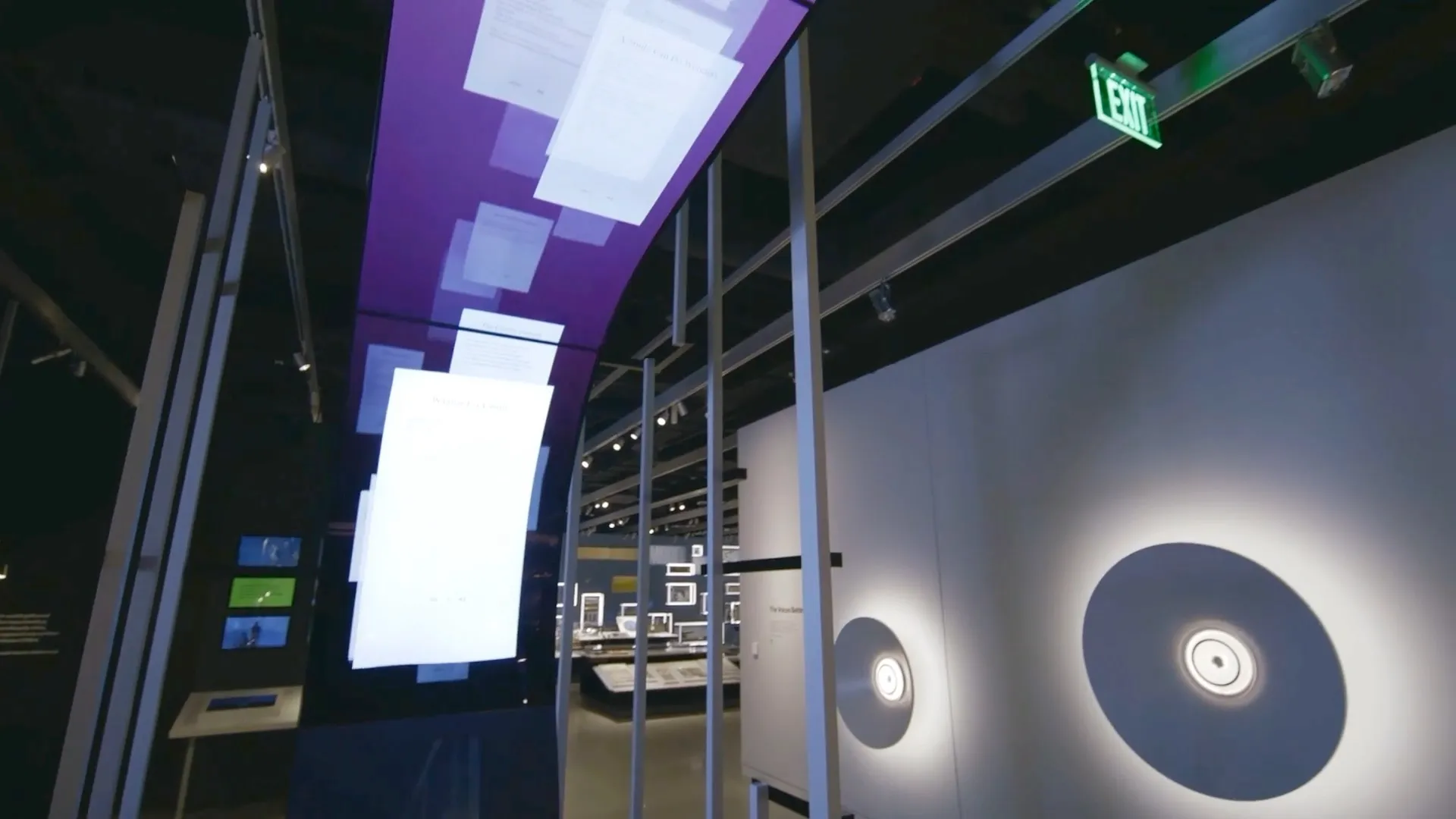
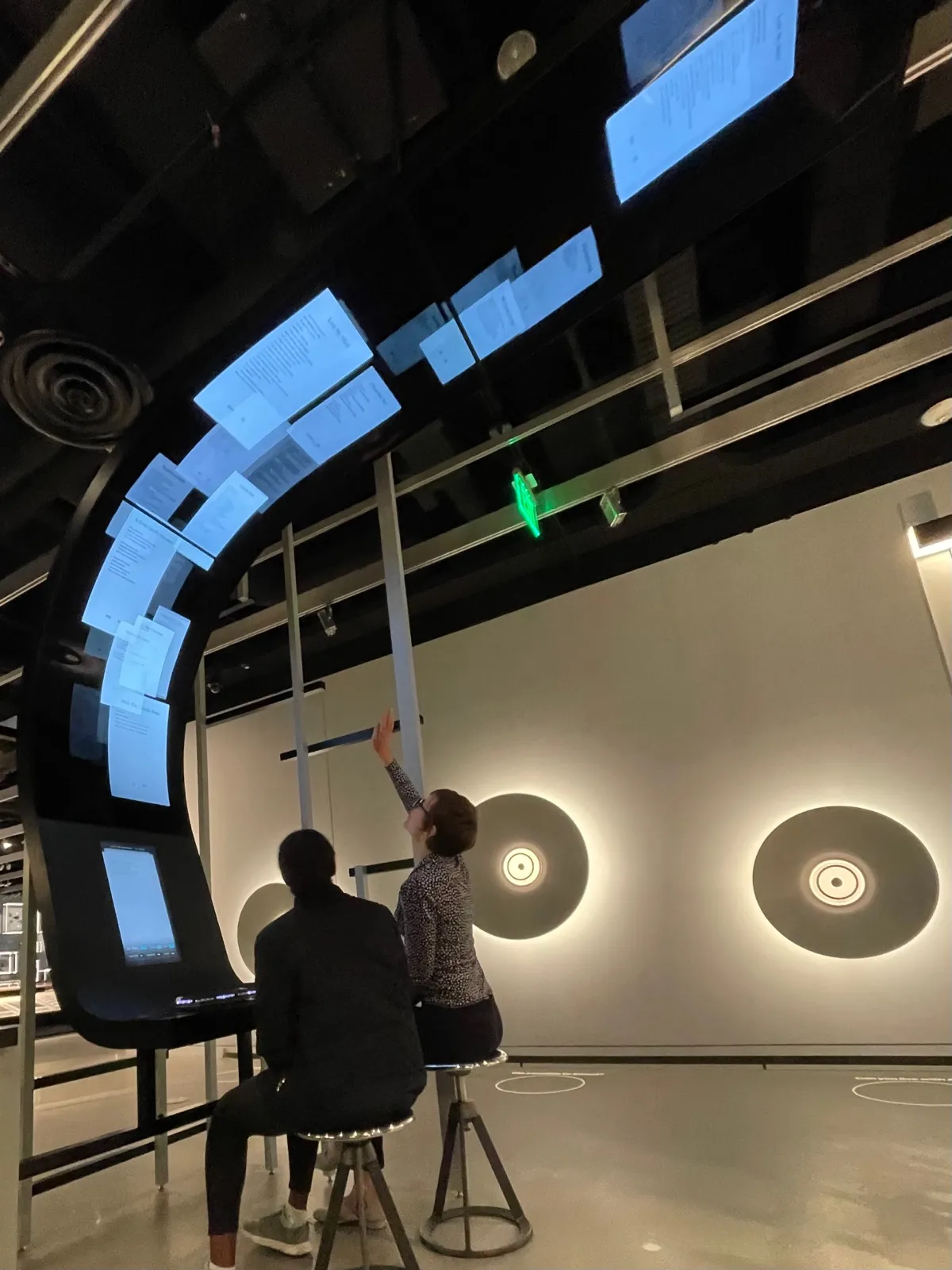
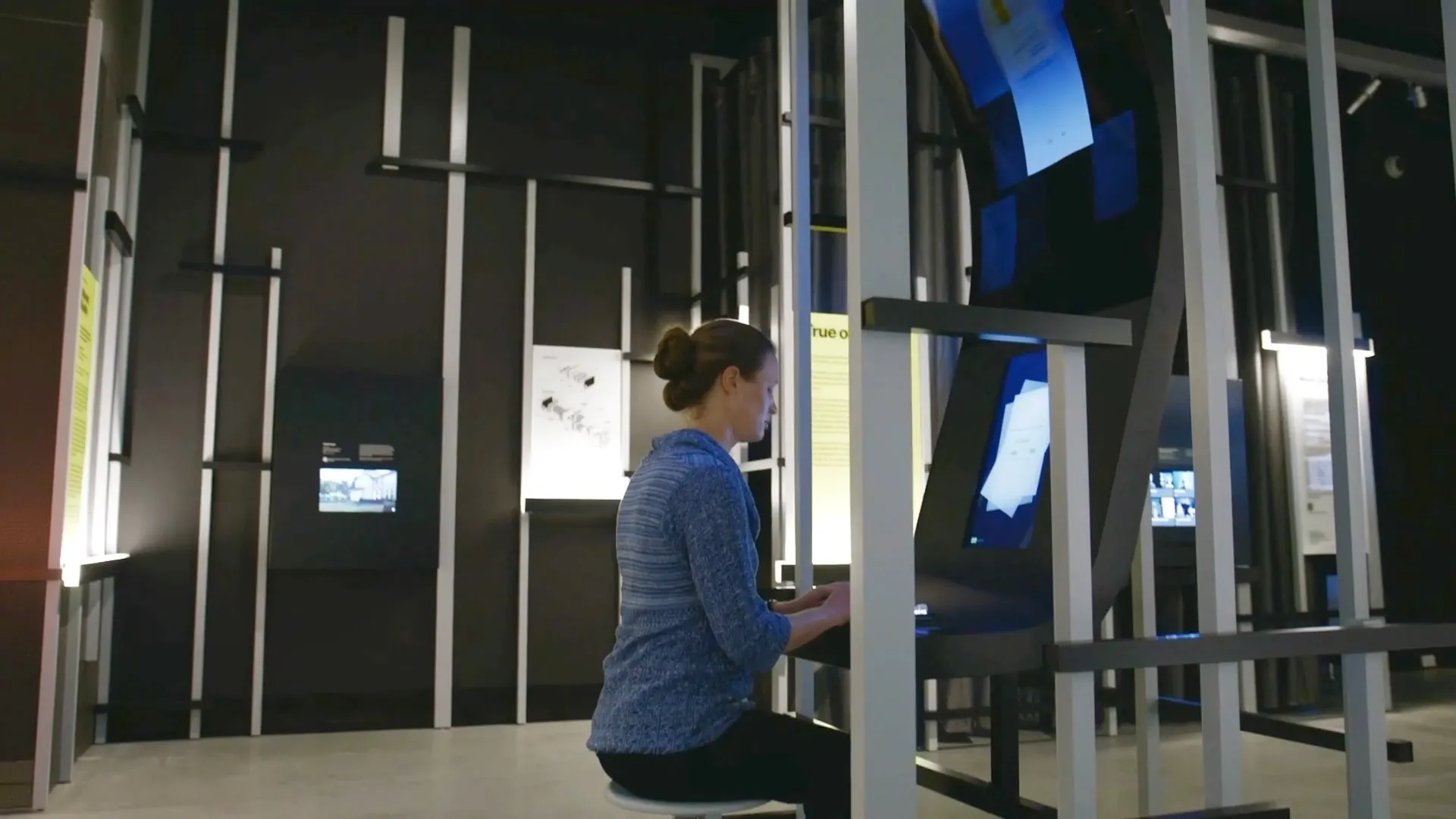
Poetry is one of the most human forms of expression. Here a visitor and an AI write a poem together, taking turns line by line, then publish it to a stream of floating poems overhead. It invites a simple question: what does creativity mean when a machine can write too?
Concept · 2020
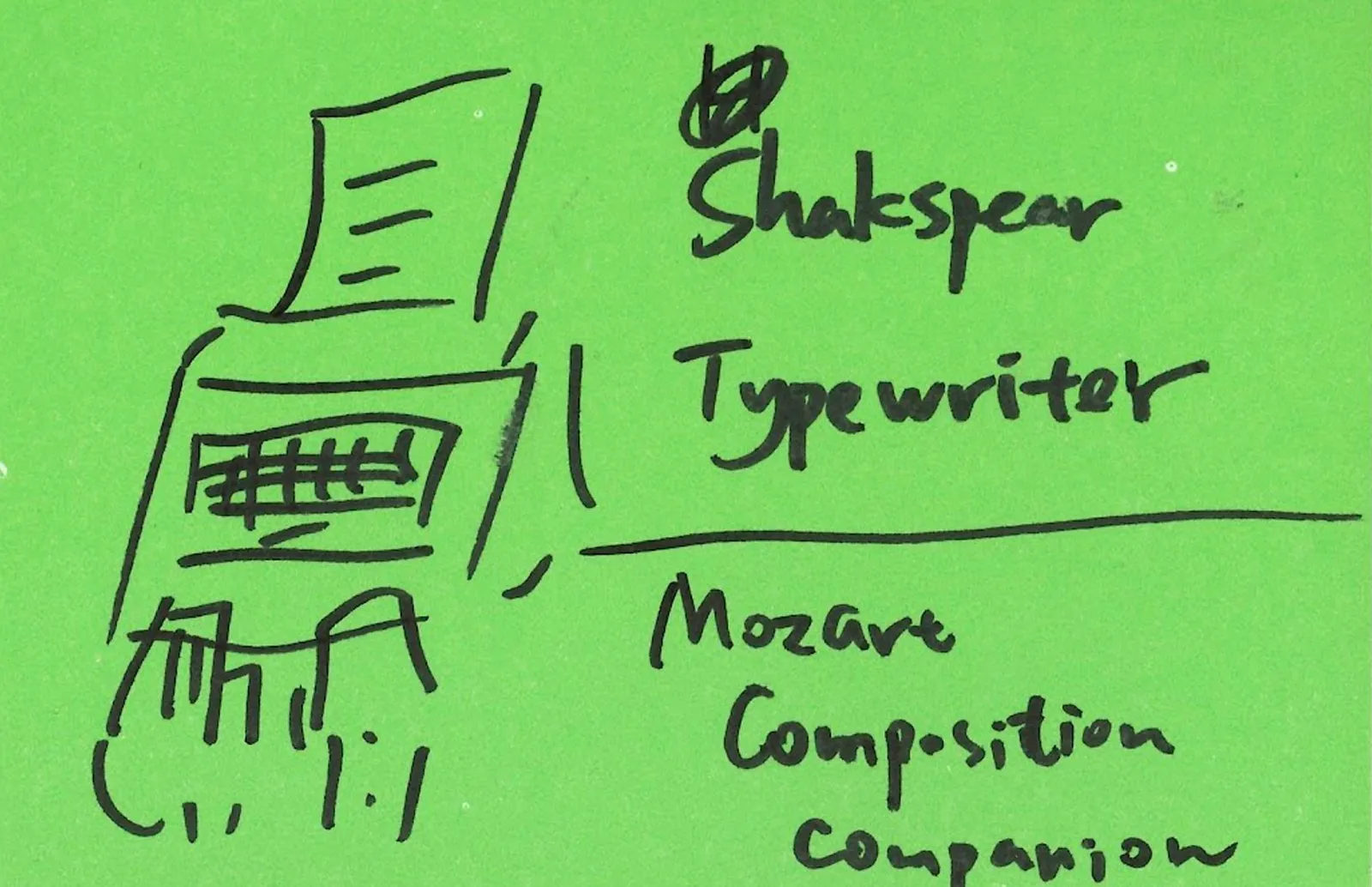
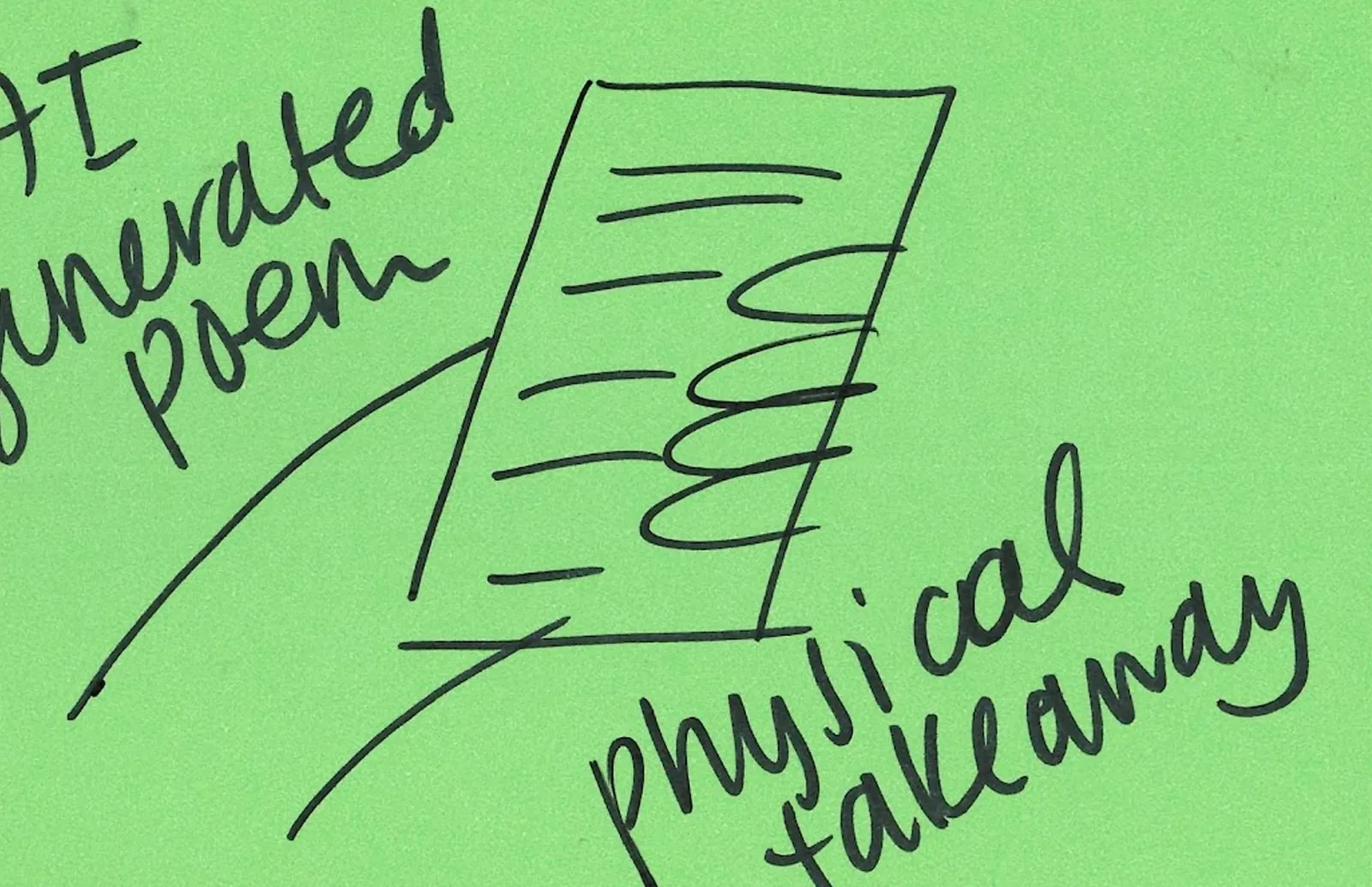
Two sticky notes, one idea
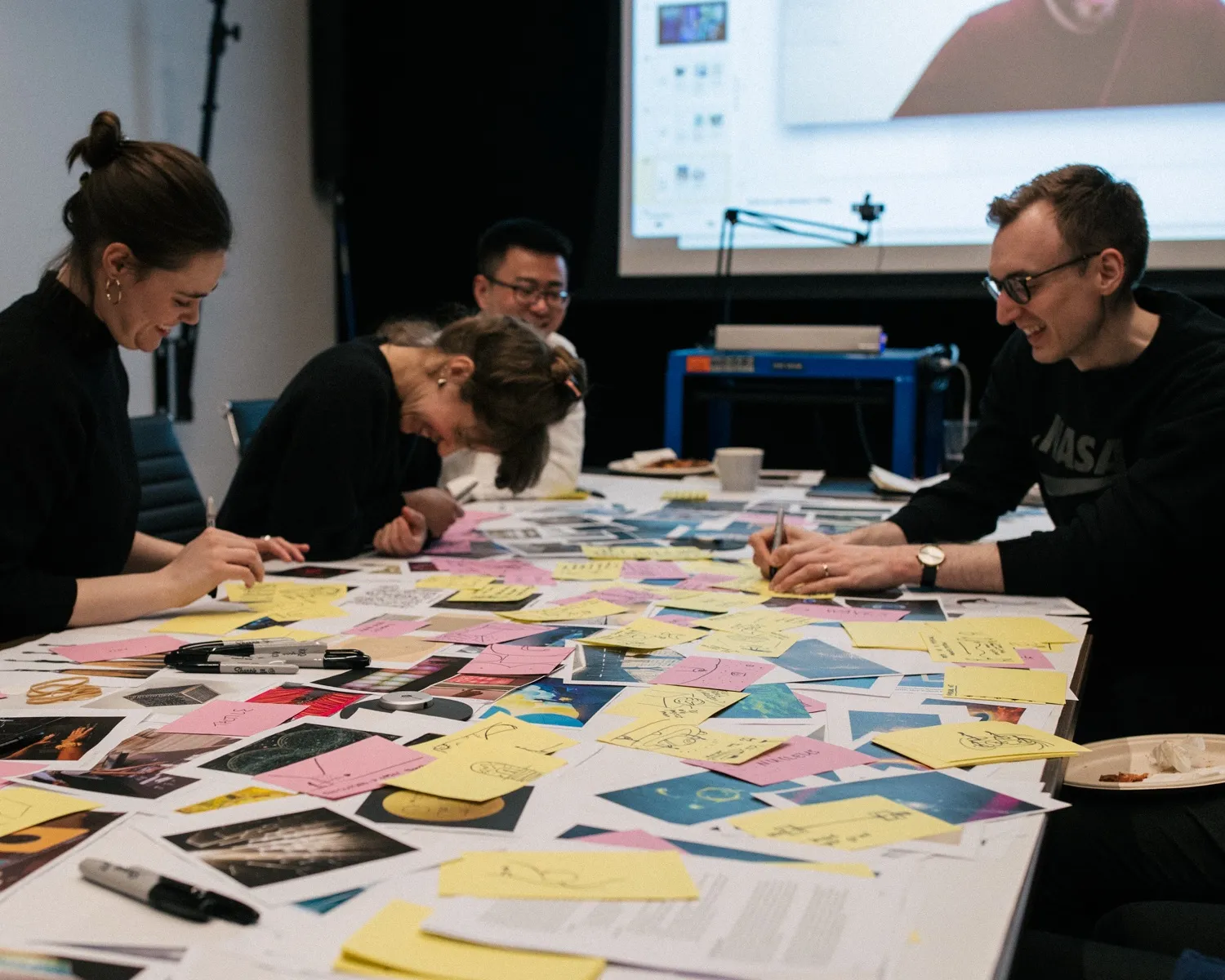
At the first brainstorm with the museum, a colleague and I wrote related ideas on sticky notes. One imagined an AI-written poem that visitors could print and take home. Mine imagined an AI with a creative will of its own, writing alongside you, like a typewriter that writes like Shakespeare. The two merged into Collaborative Poetry, which the design team developed into a quiet writing station where visitor and AI share one page.
Prototyping · 2020–2021
Prototyping ahead of the technology
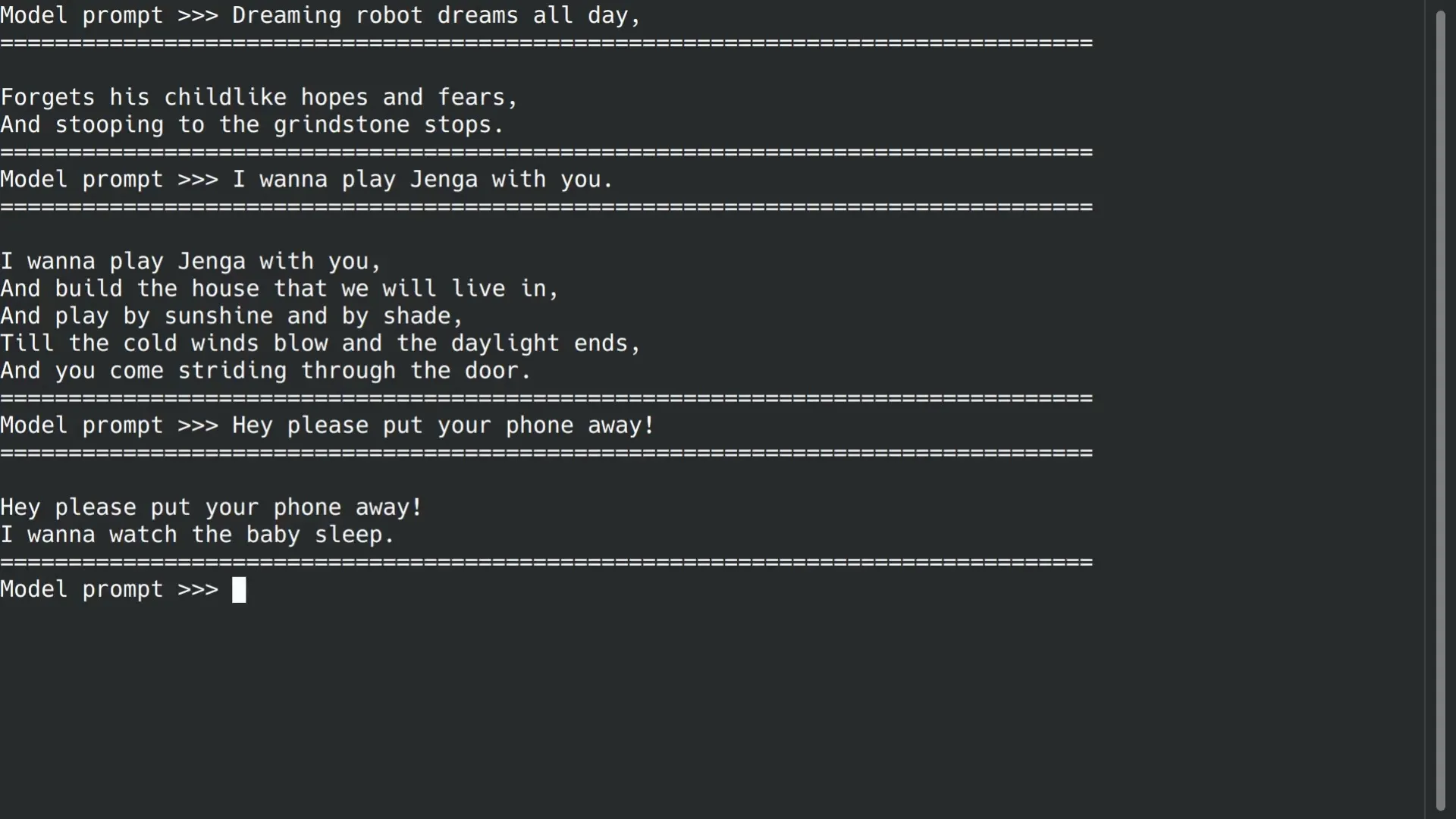
In 2020 the most capable text model was GPT-2. I built an interactive prototype with a version fine-tuned on poetry: the visitor writes a line, the model answers, and they take turns. It was rough, but it convinced the museum the idea could work.
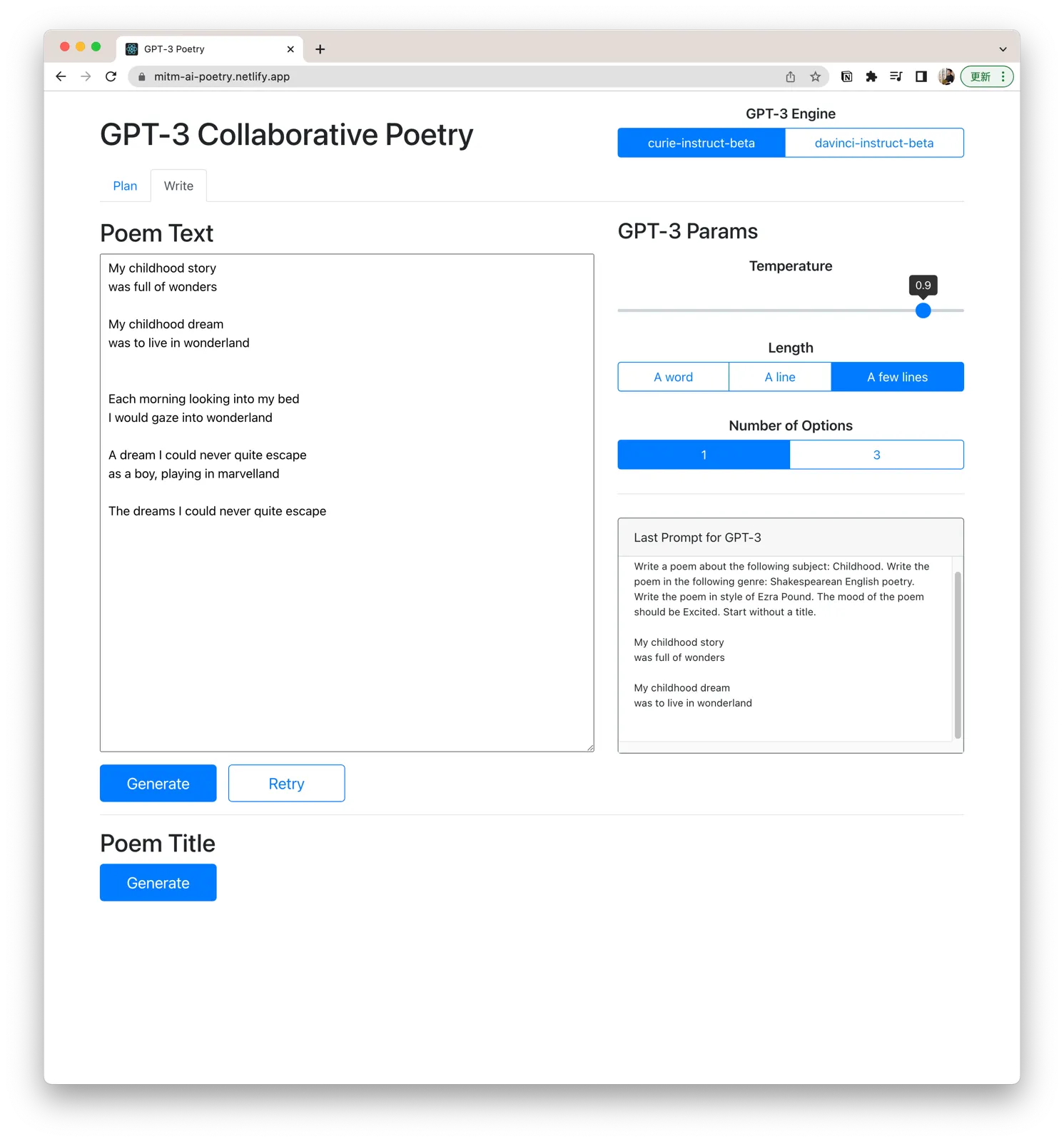
By 2021, early GPT-3 access through the museum made the writing far more natural. I used new prototypes to map what the model could reliably do: suggest a subject and mood, continue a poem, and title it when it was done.
Design · 2021
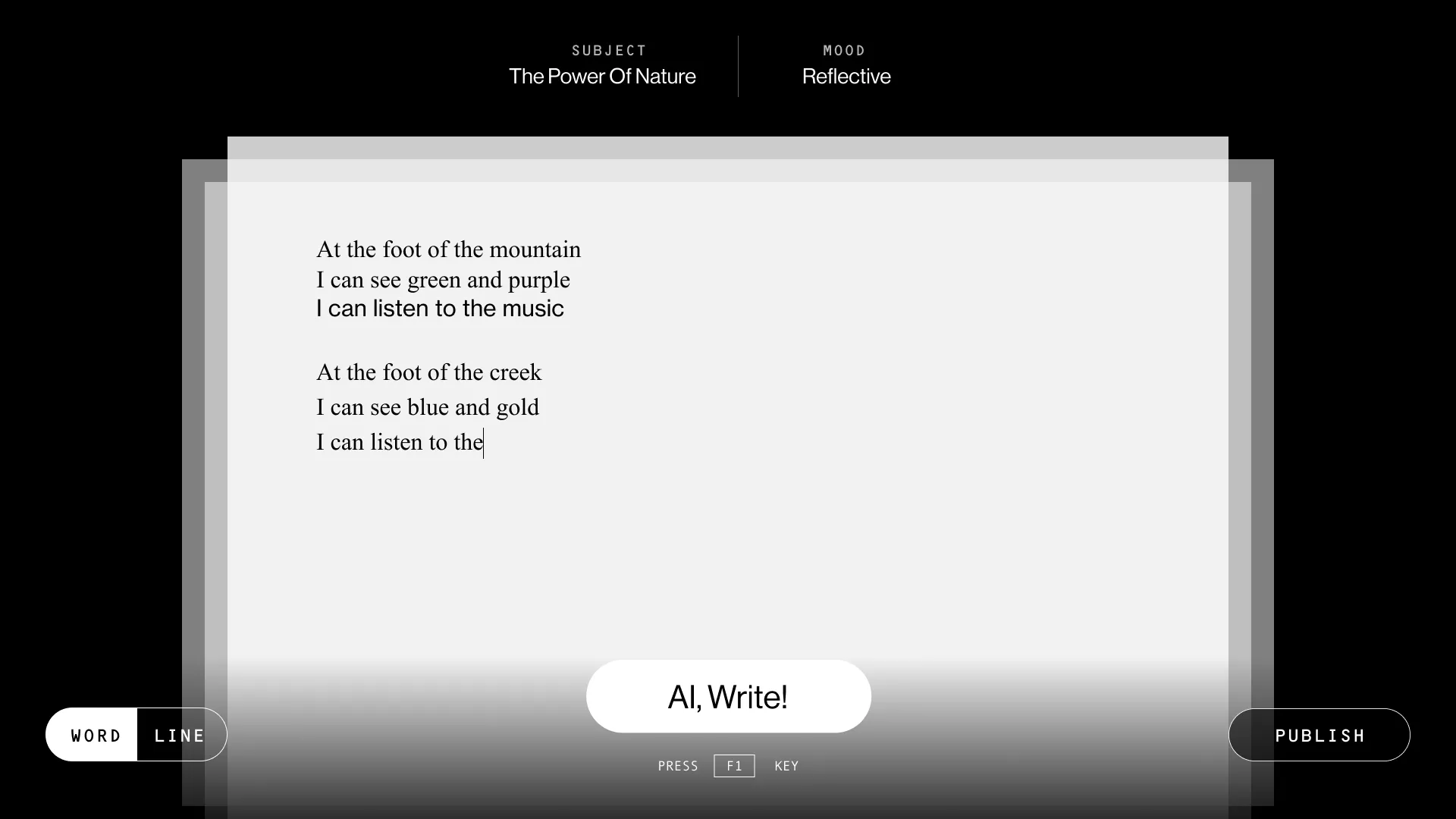
Knowing the model made the design simpler
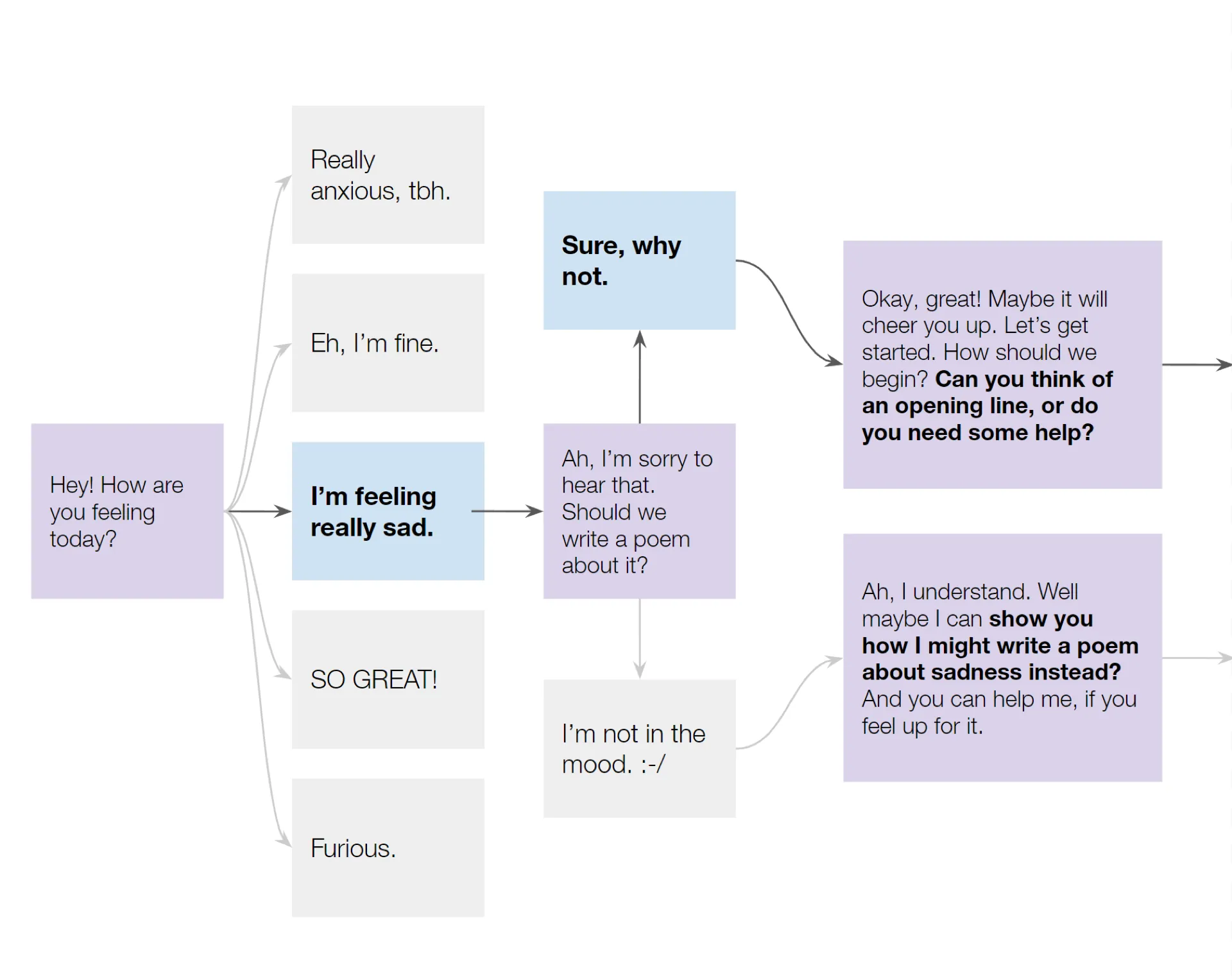
Early flows assumed a limited AI, so they wrapped writing in a guided dialogue: questions, branches, and fallbacks. Once the prototypes showed what GPT-3 could do, the team cut the interaction down to a blank sheet of paper and a single button: “AI, write.” The simpler experience was also the more powerful one.
Design · 2021
Tuning behavior with real people
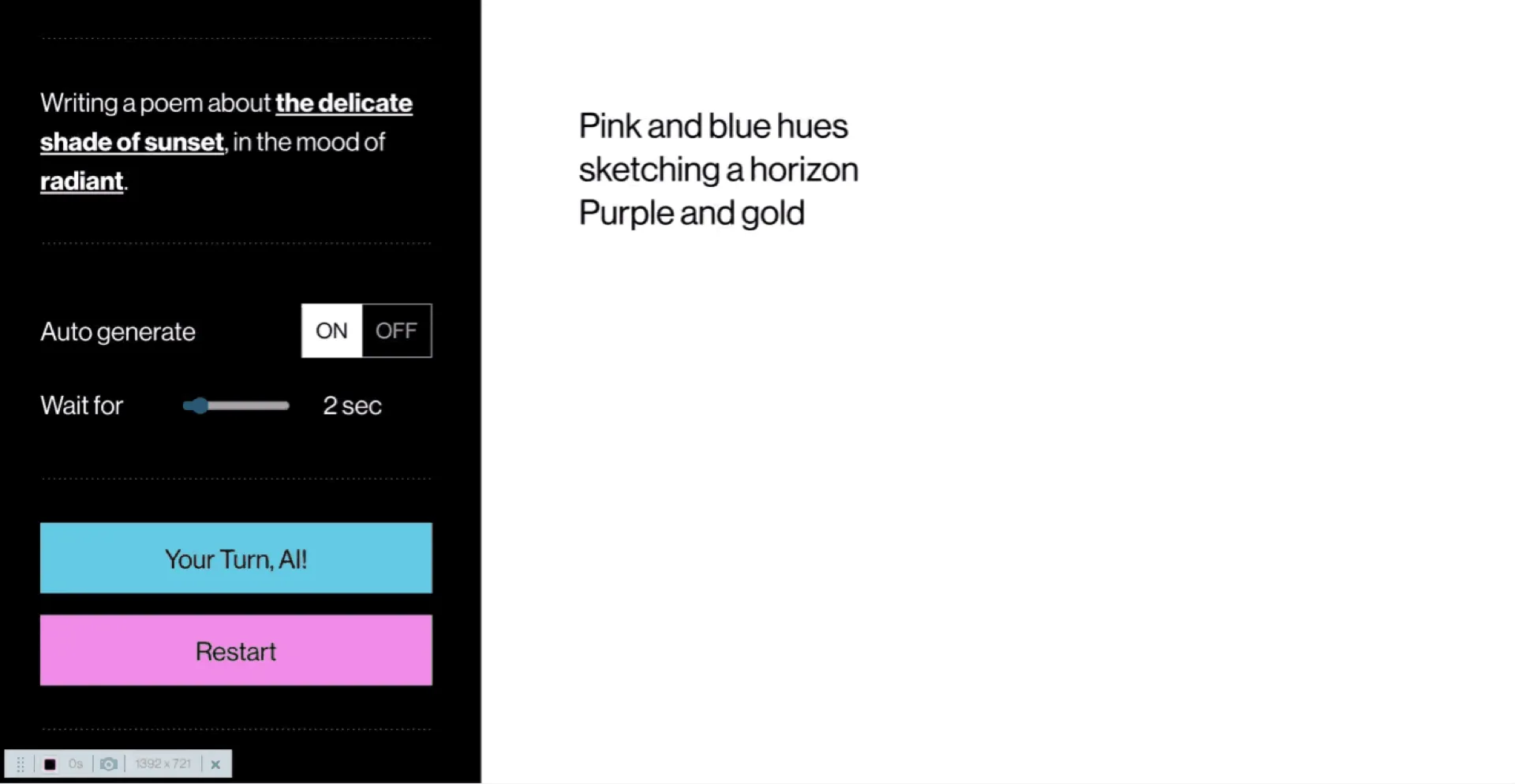
I built React prototypes for user tests to settle details that decide how collaboration feels, such as whether the AI should offer a line on its own and how long it should wait first.
A public writing tool also has to stay safe. I built moderation that screens both visitor and AI text, plus a review tool that lets museum staff remove anything that slips through.
Production · 2021–2022
Paper in a computational gallery
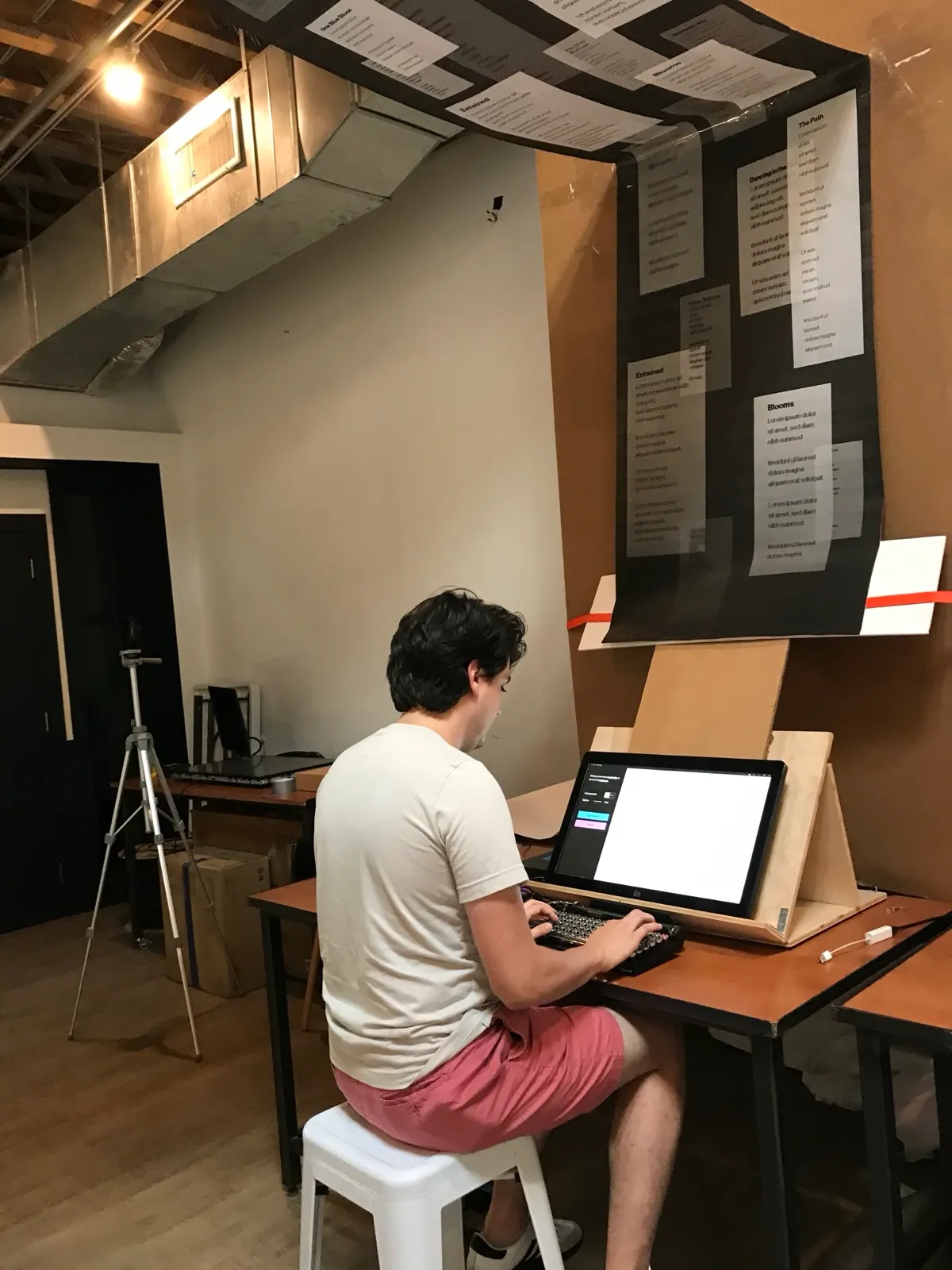
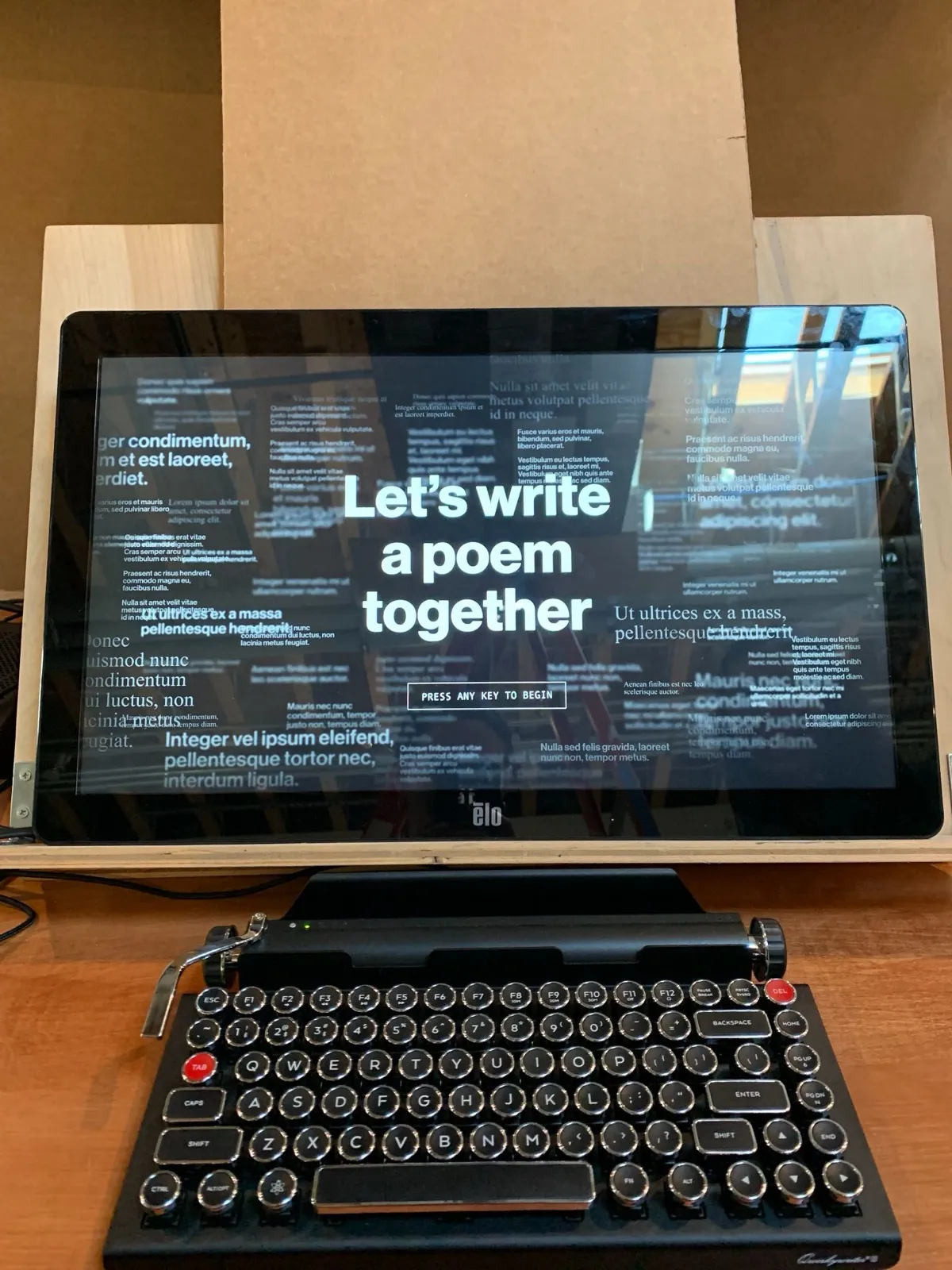
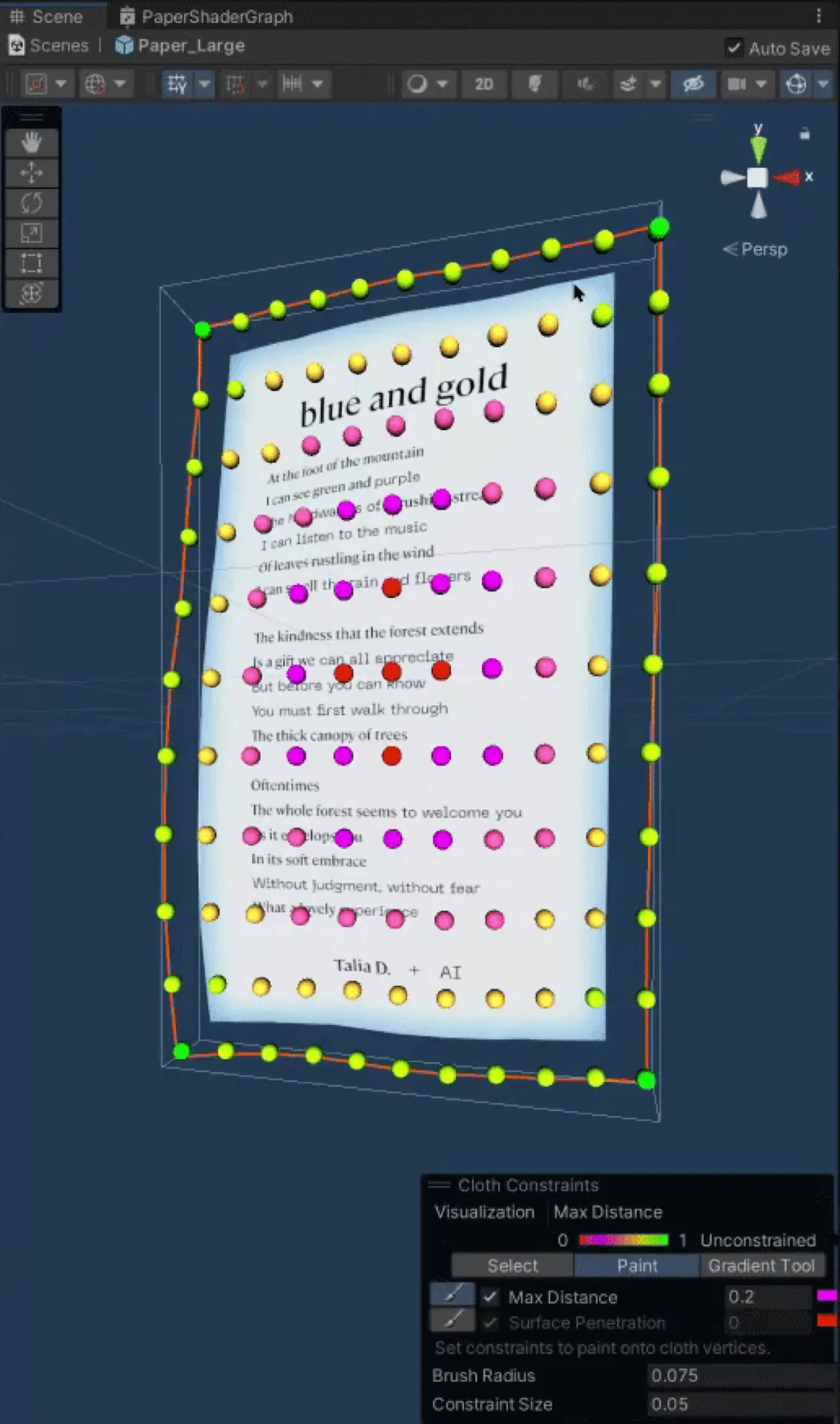
The design team wanted the intimacy of real paper, a quiet contrast to the rest of the gallery. I built it with Unity’s cloth simulation. When a poem is finished, the AI suggests a title, signs it with the visitor, and sends it up to the curved display to join the stream.
Installation 2
Black Box
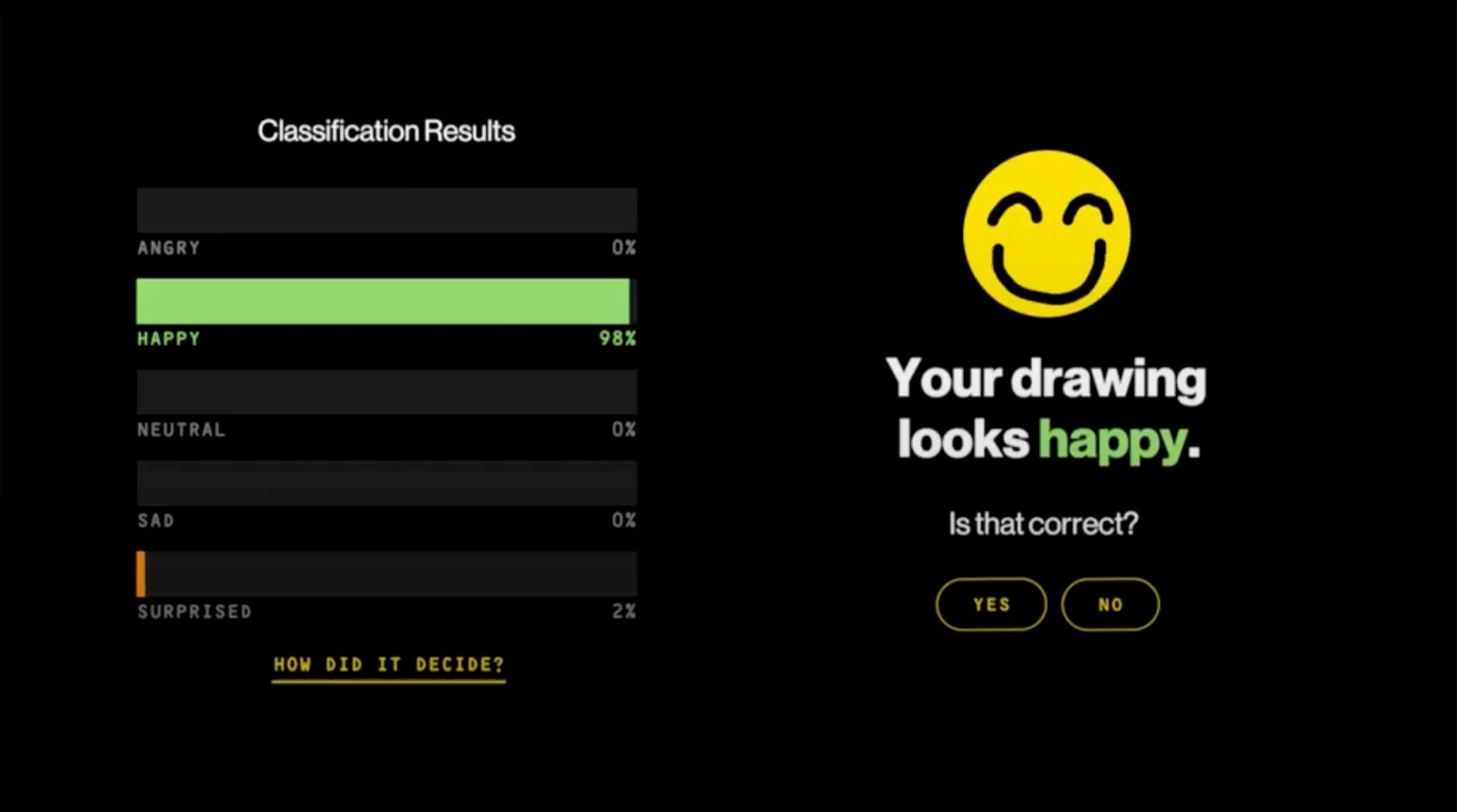
Black Box demystifies machine learning. A visitor draws a face, then watches a neural network read its emotion, layer by layer, suspended in the air inside a dark box. At the end, the network asks whether it got the answer right.
Concept · 2020
Drawing a face, not a digit
Handwritten digits are the classic first dataset for neural networks, but they leave people out. Asking visitors to draw a face instead makes the network’s task a human one: reading emotion. It also shows that AI inherits the limits of the human-made data it learns from.
As the team’s neural network specialist, I worked out what was feasible: what the network should compute, how it could be visualized, and how it would be built.


Prototyping · 2020
A dataset from the MIT community
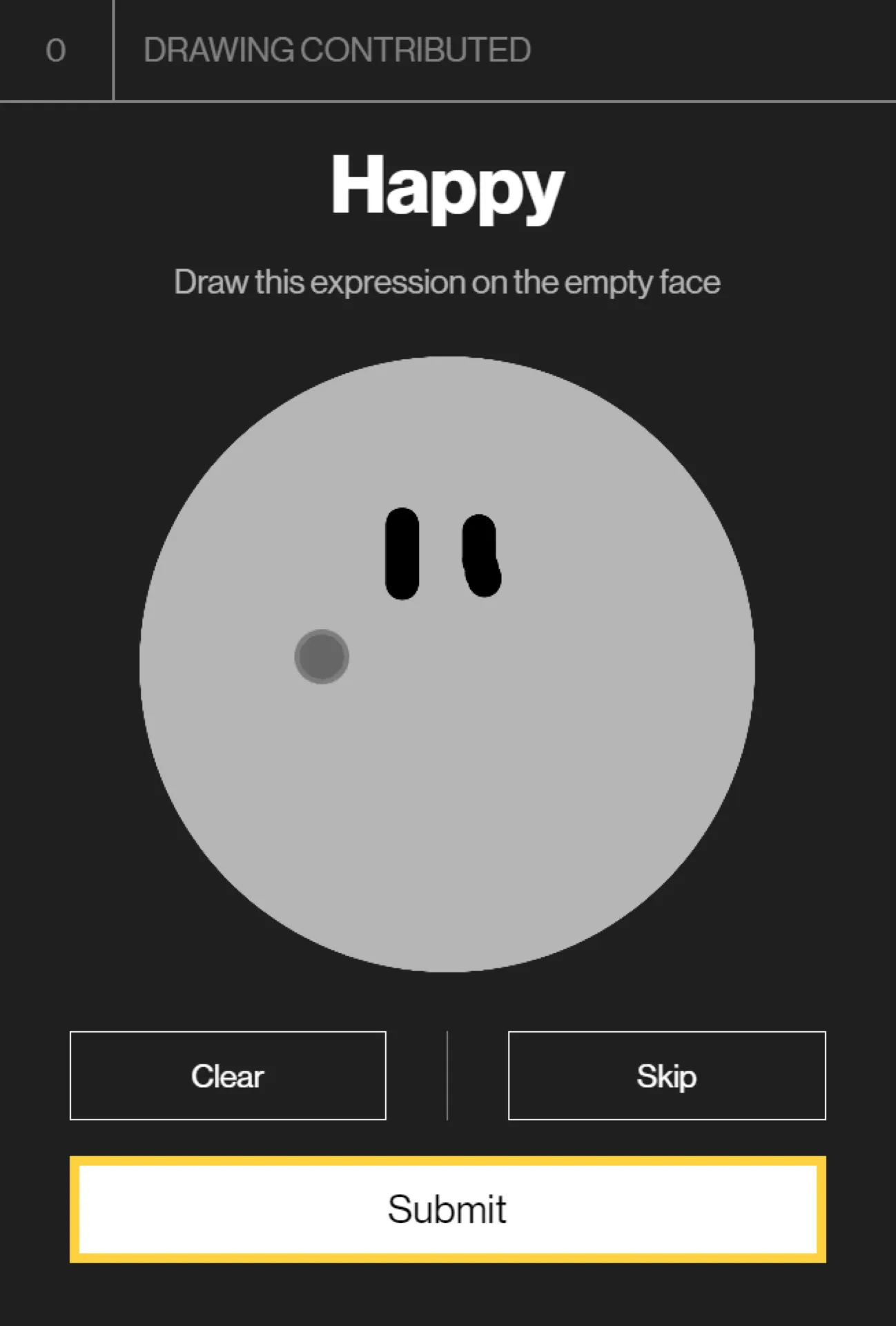
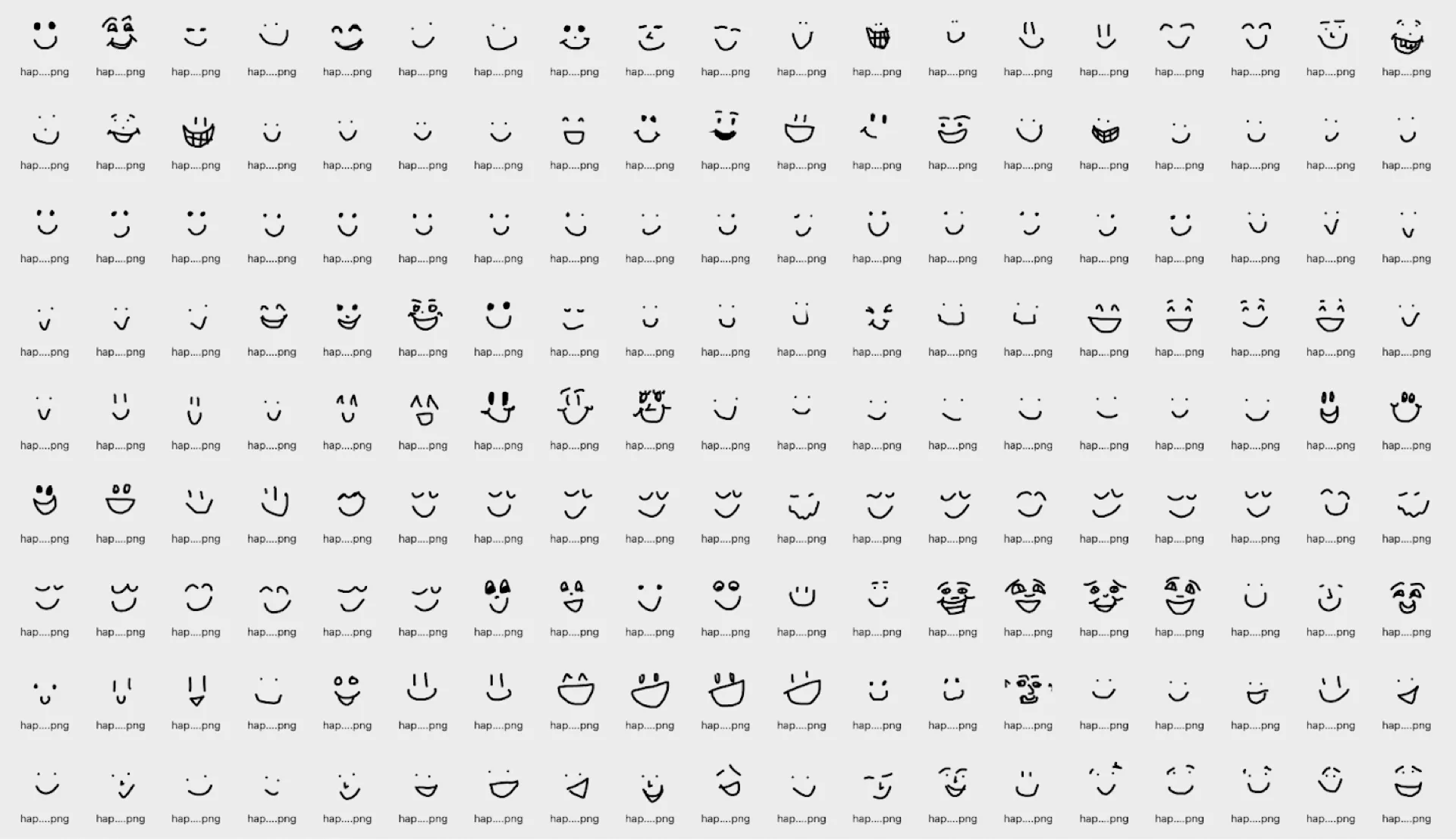
No face-drawing dataset existed, so I built one. A mobile web app asked people to draw a face with a given expression; the museum shared it with the MIT community, and more than 7,000 labeled drawings came back.
Prototyping · 2020–2021
A network small enough to see
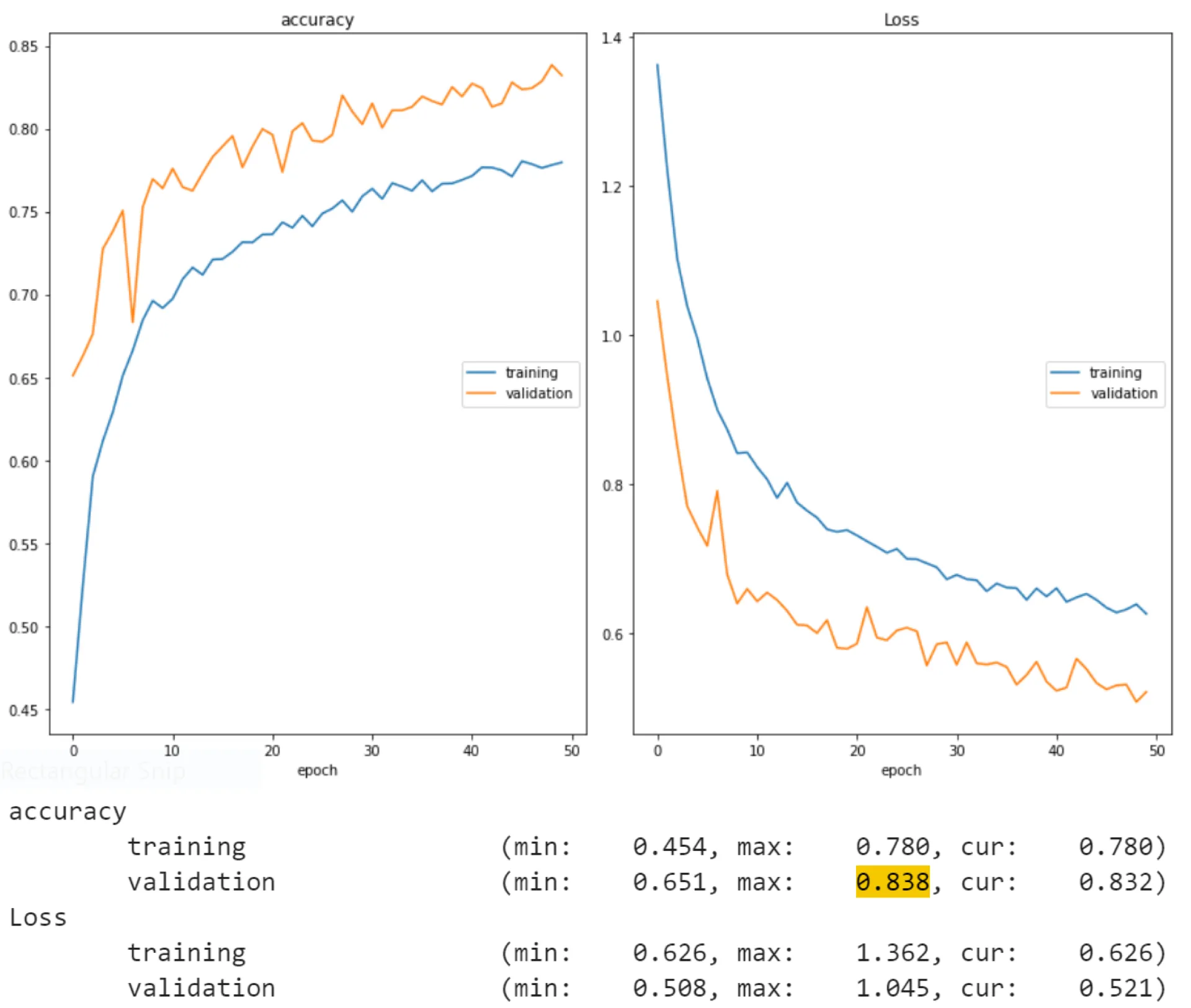
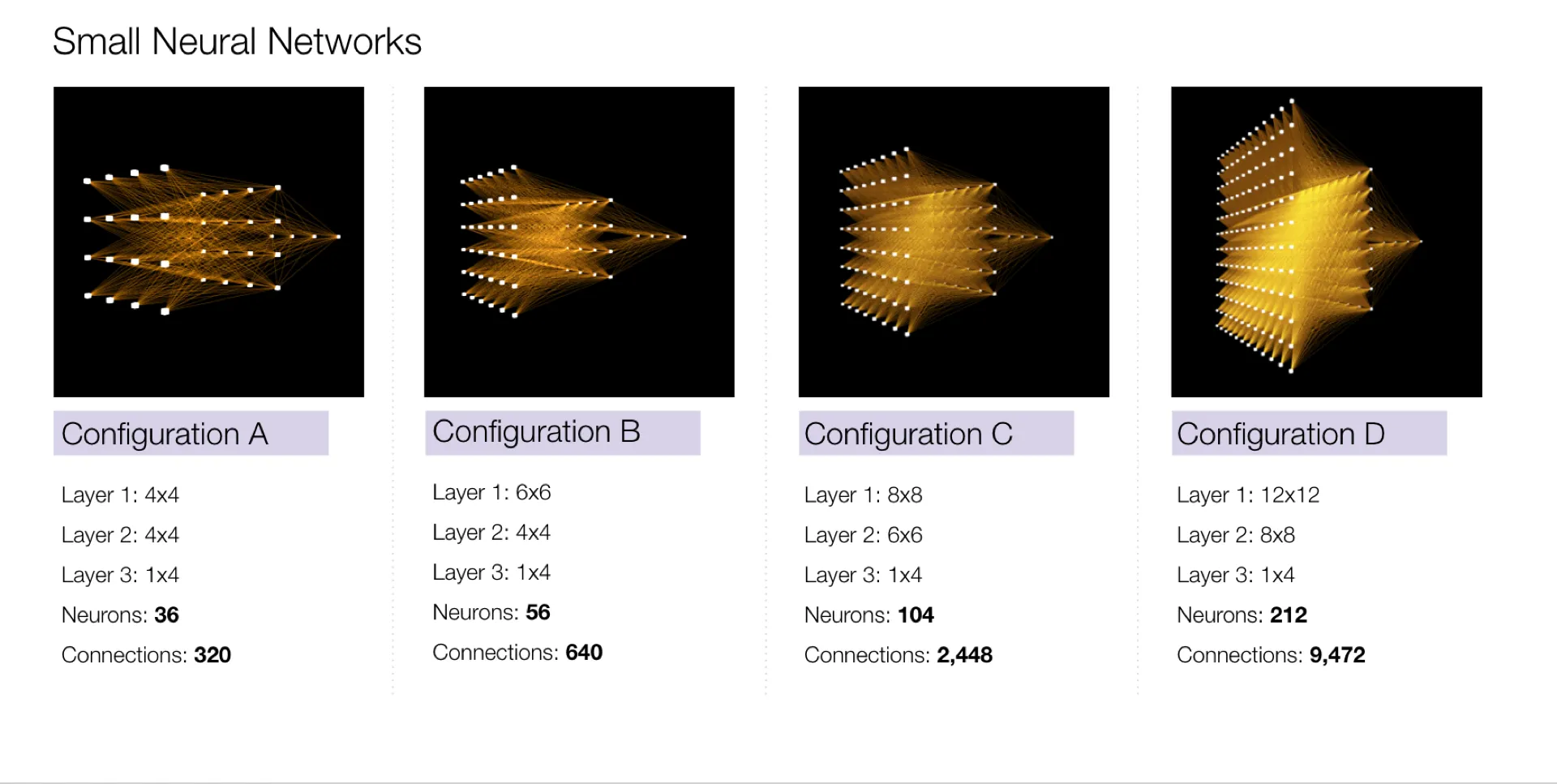
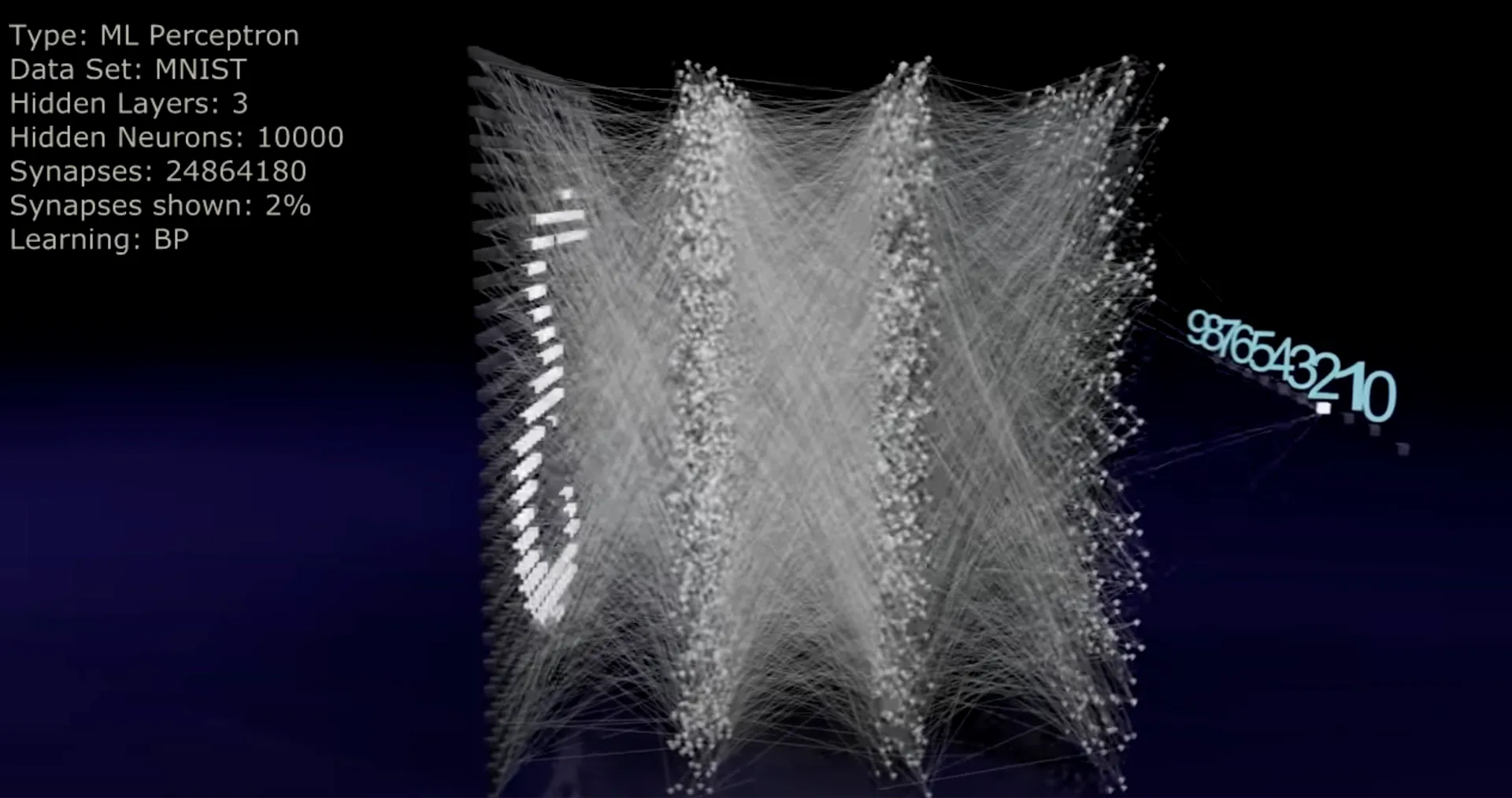
I trained a series of networks in TensorFlow and compared their size, accuracy, and look. The chosen model is over 80% accurate, yet small enough to visualize every neuron and connection, and imperfect enough that visitors can try to fool it.
Design · 2021
Giving the network real depth
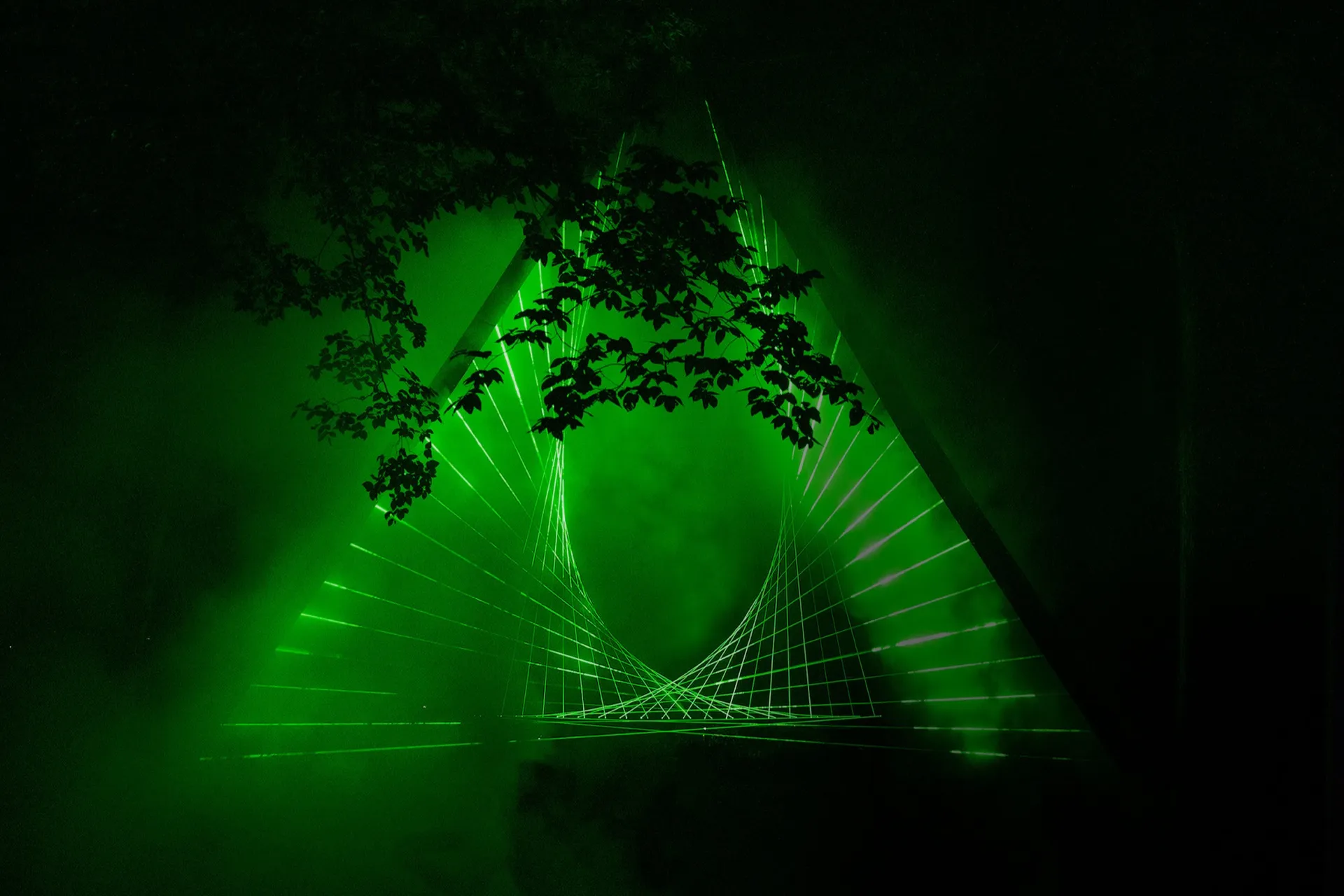
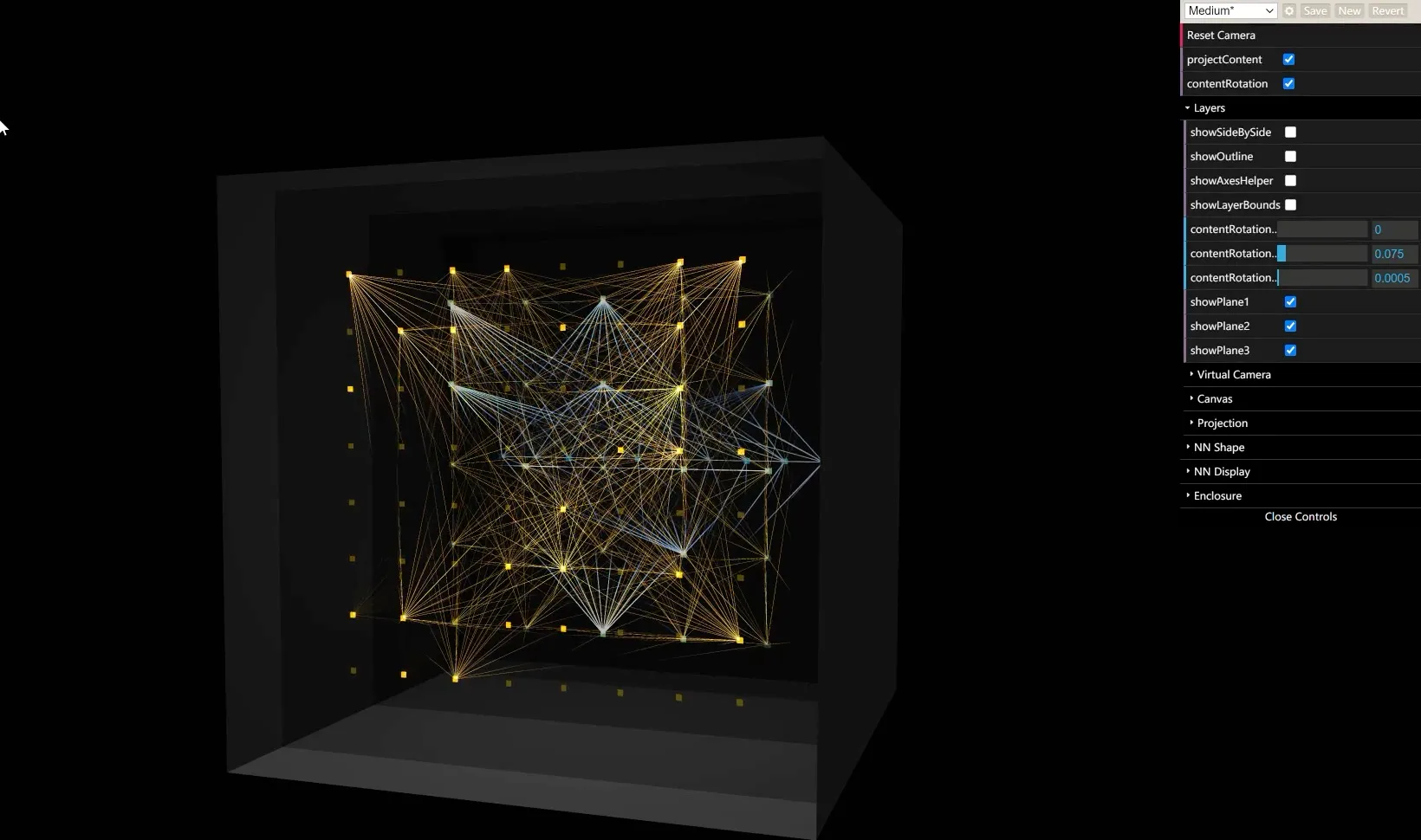
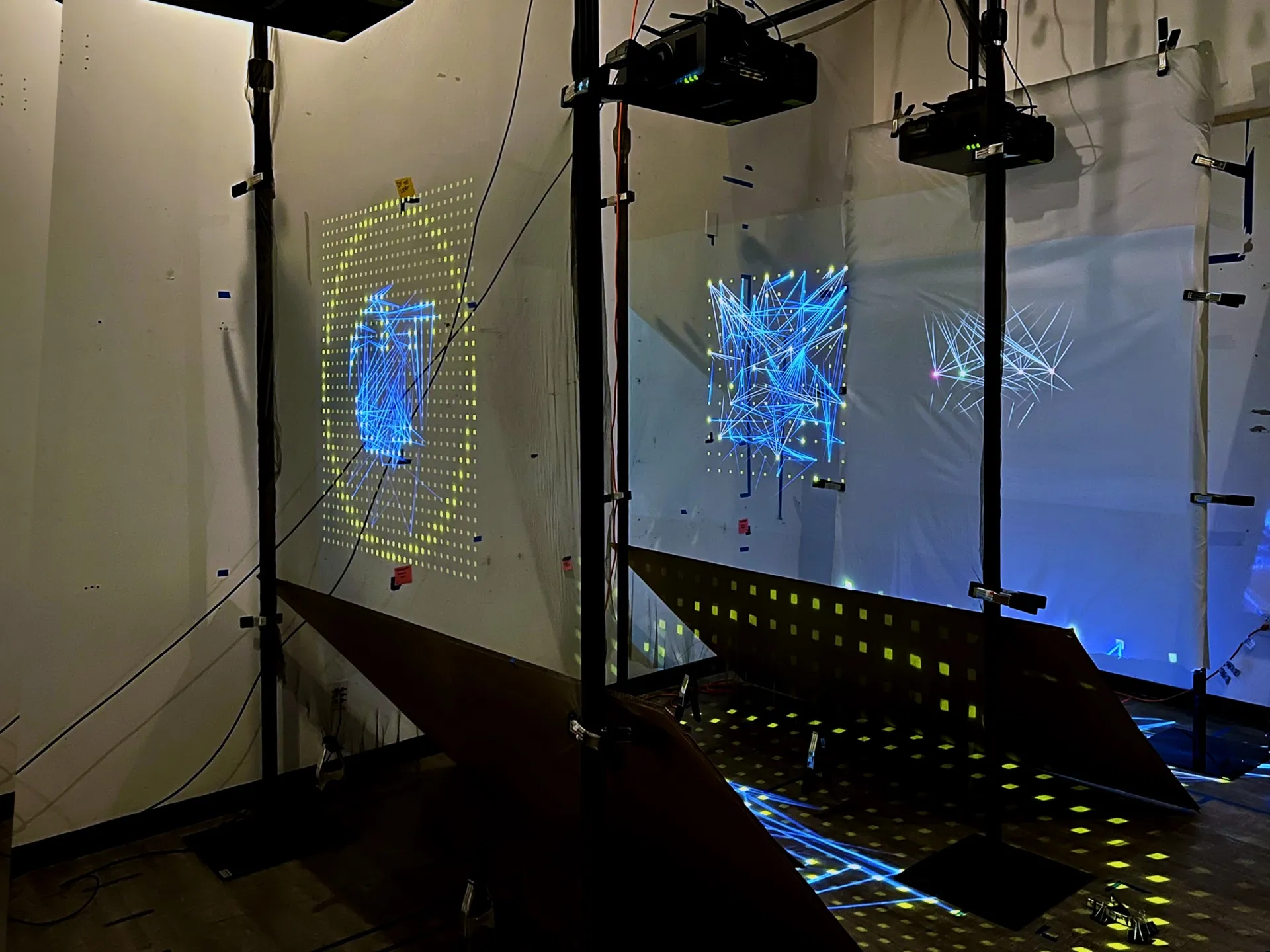
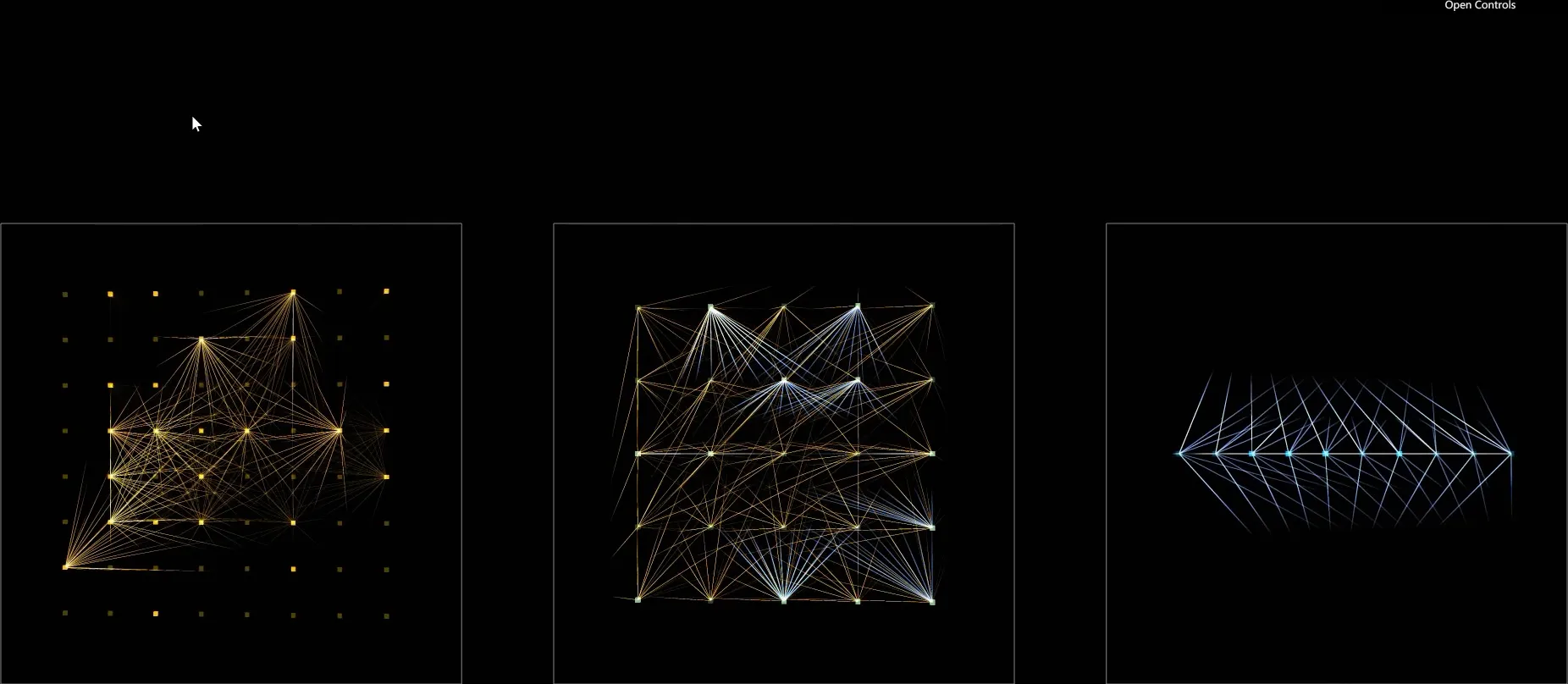
The team explored many forms, from physical builds to laser sculpture, and I tested what each could show. Even a small network has too many connections to build physically. The answer was to project each layer onto its own semi-transparent scrim, stacking them into a volume. A Three.js prototype on the real hardware gave the team the confidence to commit.
Production · 2021–2022
Real computation, in real time
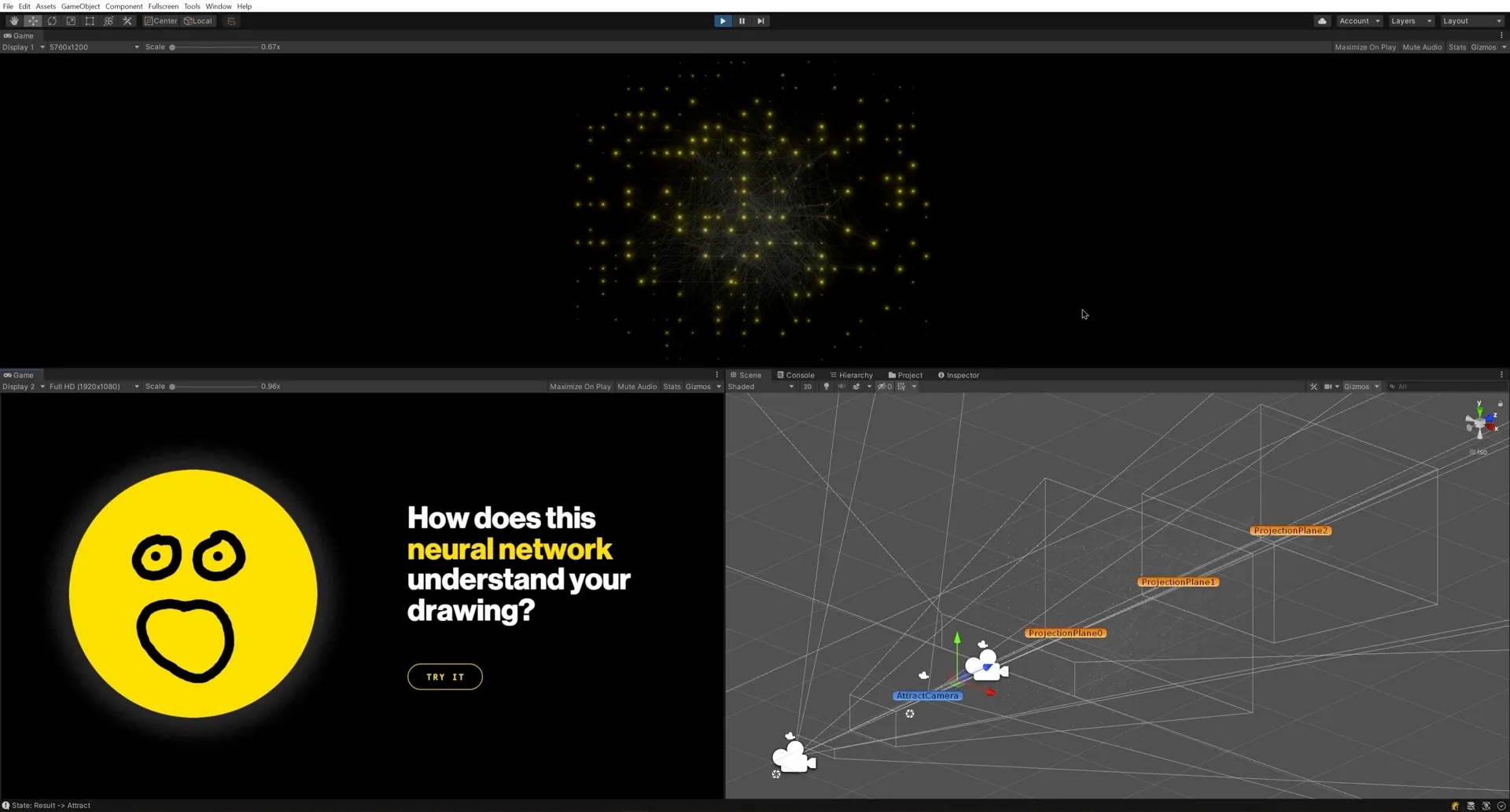
The museum’s top priority was showing real computation, not an animation. I ran the neural network inside Unity itself: compute shaders update every neuron and connection each frame, and a camera per scrim renders its slice of the network.
Outcome
In the gallery
Visitors spend long stretches at Collaborative Poetry, return with friends, and debate creativity and authorship. At Black Box they try to trick the network, and the conversation turns to bias in AI. Looking back from the ChatGPT era, the poetry station still feels current because of its restraint: one page, calm pacing, and a real exchange between person and machine.
- Webby AwardsWinner, Best Experiential Design, 2023
- SEGD Global Design AwardsMerit, 2024
- MUSE Design AwardsGold, Exhibits
- Blooloop Innovation AwardsThird place, Experiential Technology, 2022